A Beginner's Guide to Buying Rental Property in Auburn and Opelika
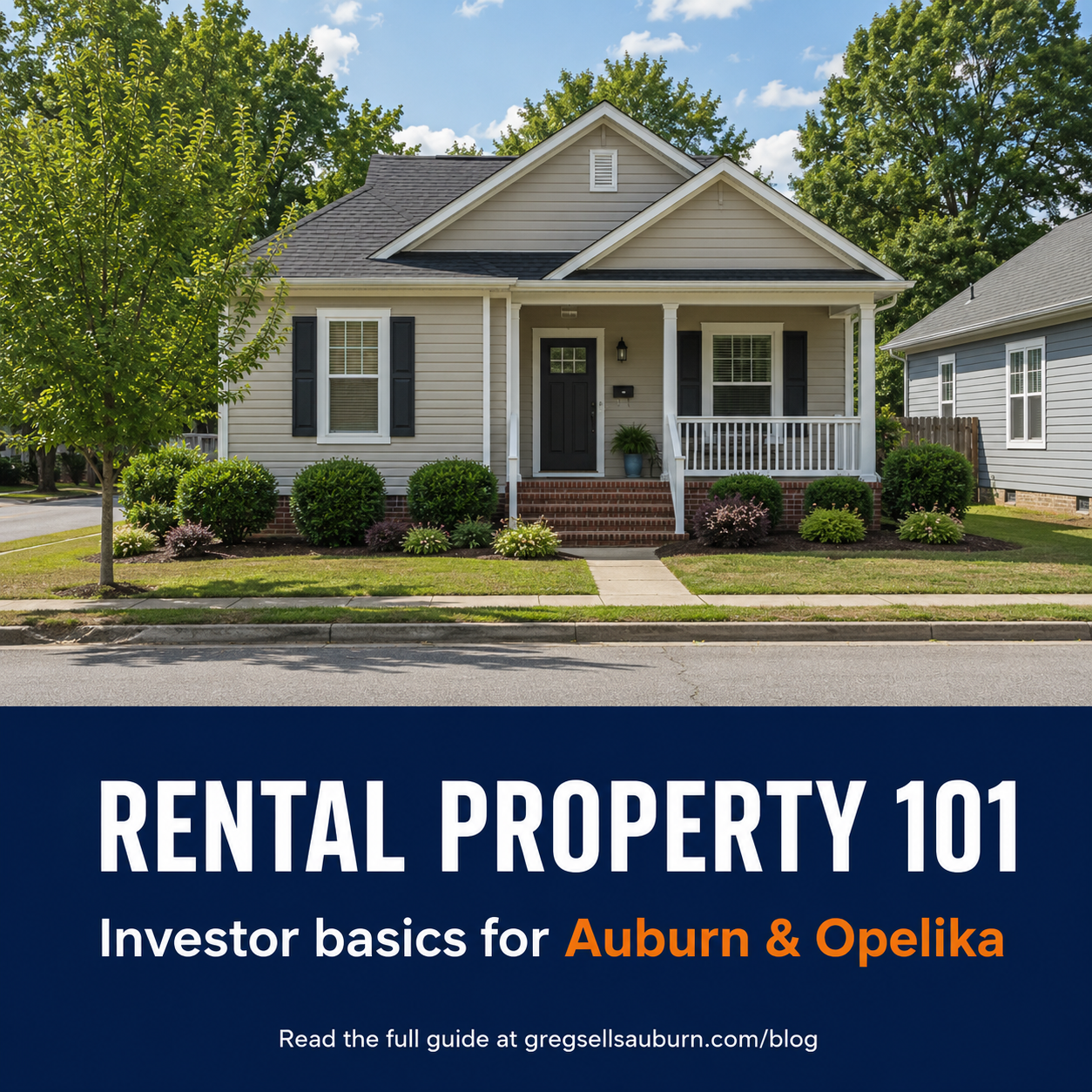
If you've been thinking about buying a rental property in Auburn or Opelika, you're probably running into the same question everyone starts with: is this actually a good place to invest, and where do you even begin? The good news is that Auburn and Opelika have a lot going for them as rental markets. Steady population growth, a large student and workforce base, and a mix of established neighborhoods with entry-level pricing make single-family rentals a realistic starting point for a first-time investor. This guide walks through the fundamentals: how to think about cash flow, what financing looks like for a beginner, and what to watch for before you make an offer.
Why Investors Look at Auburn and Opelika
Auburn and Opelika benefit from a few structural advantages that matter for rental demand. Auburn University brings a steady stream of renters (students, staff, and visiting families) into the market year-round, not just during peak leasing season. Opelika has its own draw, with continued job growth from manufacturing and industrial employers pulling in workers who rent before they buy. Both cities also sit in Lee County, where property taxes are relatively low compared to national averages, which helps the math work for a lot of investment scenarios.
This post is not about student housing specifically. For more info on student-centered properties, check out my Auburn University Student Housing site. It's about single-family home (SFH) rentals in both cities, particularly at lower price points where a first-time investor is more likely to get started.
How to Think About Cash Flow (Without Overcomplicating It)
Cash flow is simply what's left over each month after you've paid the mortgage, taxes, insurance, and any property management or maintenance costs, compared to what you're collecting in rent. For a beginner, the goal isn't to memorize a formula. It's to understand the pieces:
- Rent income: what a comparable home in that neighborhood would realistically rent for
- Fixed costs: mortgage principal and interest, property taxes, homeowners insurance
- Variable costs: maintenance, vacancy periods, property management if you're not self-managing
- Financing terms: your down payment and interest rate directly affect your monthly payment, so two identical houses can perform very differently depending on how they're financed
Rental rates vary block by block and even street by street in Auburn and Opelika, and pulling a number from a national rent site can be misleading for your specific property. If you want a realistic cash flow estimate for a property you're considering, that's something worth running with current local numbers before you make an offer.
Where Lower Price Point SFH Opportunities Tend to Show Up
Both Auburn and Opelika have pockets of the market where single-family homes sit at a more accessible entry price, which matters for a first-time investor working with a limited budget. In general:
- Established neighborhoods with older housing stock tend to carry a lower basis than newer construction
- Opelika, as the sister city to Auburn, generally offers a lower price point across comparable home types
- Proximity to campus raises price and rental demand together, so the lowest entry prices are usually a short drive rather than walking distance from Auburn University
If you have a target price range in mind, that's a conversation worth having early, since it narrows down which neighborhoods and property types actually make sense for your budget.
To see a live list of affordable homes across Auburn & Opelika, check HERE. You can adjust the settings to fine-tune just what you are looking for.
Financing Basics Every First-Time Investor Should Understand
This is where a lot of new investors get tripped up, not because the concepts are complicated, but because nobody explains them clearly before that first call with a lender. Here's what you need to be able to talk about confidently.
Conventional investment property loans
Financing a rental property is not the same as financing a primary residence. Lenders generally require a larger down payment, often in the 15 to 25 percent range, and interest rates on investment properties typically run somewhat higher than owner-occupied rates (up to 1% over a typical residential rate). Your lender will also want to see reserves (extra cash on hand beyond the down payment) to show you can cover a few months of payments if the property sits vacant.
DSCR loans
DSCR stands for Debt Service Coverage Ratio. This is a type of loan that qualifies you based on the property's expected rental income rather than your personal income and tax returns. It's worth asking your lender or mortgage broker whether this is an option for you, particularly if you're self-employed or already have several properties financed conventionally.
Questions to ask your lender or bank
- What down payment percentage will you require for this specific property type?
- Do you offer DSCR loans, and how do the rates compare to conventional investment loans?
- How many financed properties can I have before your guidelines change?
- What reserve requirements apply to this loan?
Walking into that conversation with these questions ready will save you time and help you compare lenders on equal footing.
Should You Buy the Property in an LLC?
This is one of the first questions a lot of new investors ask, and it's also one where there's no single right answer. Some investors buy rental property in their own name, especially early on, while others set up an LLC for liability protection or to keep rental activity separate from their personal finances. Each approach has tradeoffs.
- Buying in your own name is simpler and can make financing more straightforward with often better terms, since many conventional loans are written for individual borrowers rather than entities.
- Buying through an LLC can offer liability protection and cleaner separation of business and personal finances, but it often comes with different financing requirements, additional setup and filing costs, and it can affect how you report income for tax purposes.
This is not a decision to make based on a blog post or a quick internet search. Your accountant can walk you through the tax implications, and your attorney can advise on liability protection and how to structure the purchase correctly from the start. Talk to both before you decide, ideally before you're under contract.
Common Questions First-Time Investors Ask
Do I need a large down payment to buy a rental property in Auburn or Opelika?
Typically yes, more than you'd put down on a primary residence. Conventional investment property loans generally start around 15 percent down, though your exact requirement depends on the lender, the property, and your financial profile.
Is Opelika a better starting point than Auburn for a first rental property?
Not necessarily better, but often more accessible. Opelika tends to offer a lower entry price point for comparable single-family homes, which can make the numbers work more easily for a first-time investor with a limited budget.
Should I manage the property myself or hire a property manager?
This depends on your schedule, how close you live to the property, and your comfort level handling tenant issues directly. Self-managing saves money but takes time. A property manager costs a percentage of monthly rent but handles tenant communication, maintenance calls, and leasing.
How do I know if a specific property will actually cash flow?
You need current, local numbers, not a national average. That means realistic rent comps for that specific neighborhood, an accurate estimate of taxes and insurance, and a clear picture of your actual financing terms. Getting a current home value estimate is a good first step for any property you already own or are considering.
Getting Started
Buying your first rental property in Auburn or Opelika is a realistic goal, especially if you start with a clear-eyed view of financing and cash flow rather than jumping straight to a listing. If you're ready to talk through what a specific property or price range would actually look like on paper, reach out and let's talk through it.
Categories
Recent Posts